
Managers, are these situations familiar?
1)
Your experienced people often show new hires how to do complex things.
2)
Your team is confused after a presentation on a new feature or product.
3)
You wish you could provide coaching but you just don’t have the bandwidth.
If you walked into the office tomorrow and these issues were addressed, what would that look like?
We’ve been exploring these scenarios with managers and would like to share our proposed solution.
TL:DR –
We’ve built a smart platform to support participants (and their managers) who take part in our Train-the-Trainer program.
Here’s how CORDAGE and the CordAI knowledge engine provides a contextualized experience specific to our participant’s company, industry, and subject-matter expertise:
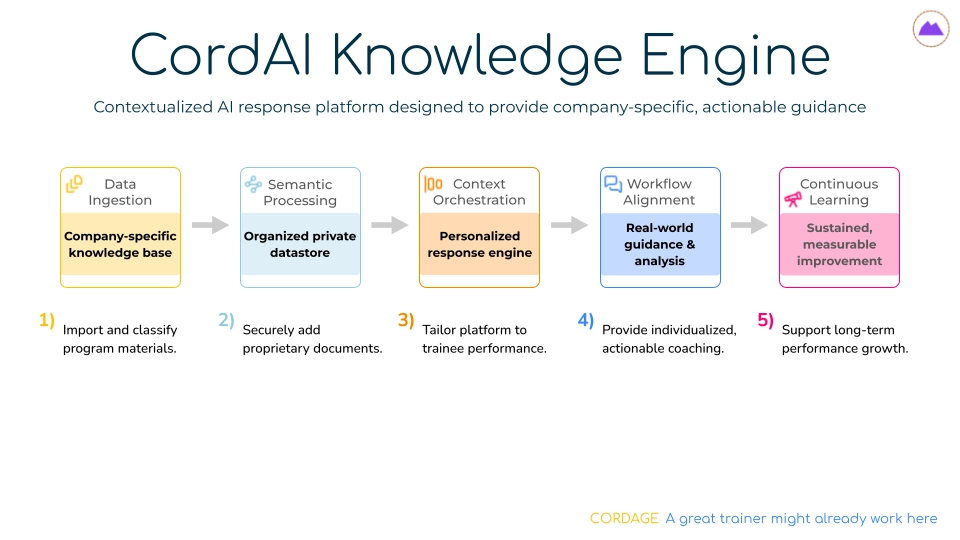
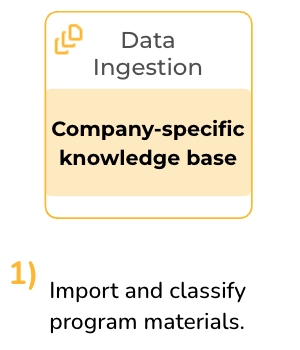
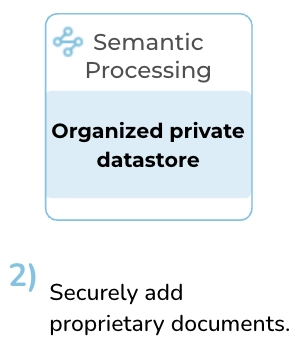
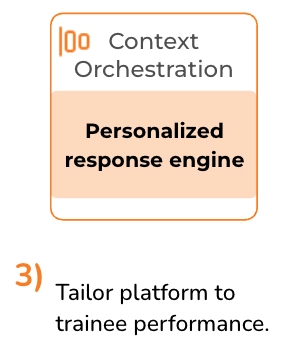
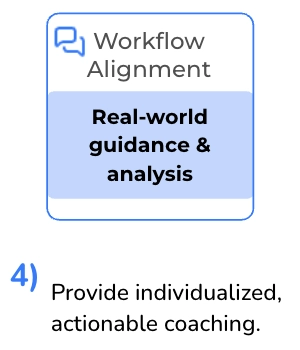
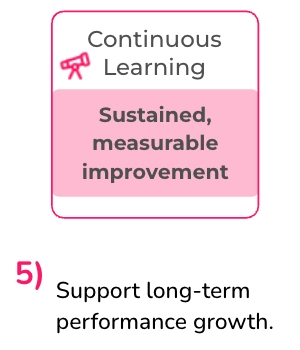
The above image(s) depicts the CORDAGE knowledge engine.
Please read on for more detail.
A little background
This is the third article in our series on how we’re helping organizations identify and develop employees to become internal trainers and facilitators.
In our September 2025 newsletter – What’s New With GimmeCredit? – we shared we were conducting research based on a couple hypotheses: Companies want skilled trainers in their organization, and experienced employees want to be considered experts on certain topics and share their knowledge with colleagues.
After conducting a series of discovery interviews and further research, we wrote this article: 4 Ways for Managers to Spot a Great Trainer, which provides advice for managers on how to identify and evaluate potential trainers on their team – complete with downloadable cheat sheet.
Here, we’ll cover in detail the approach we’ve created based on our findings and our own experience within the L&D field, especially with Train-the-Trainer and Instructor-Led Training programs. Throughout our many years in the field helping organizations create and deliver training programs; where subject-matter experts hold live, in-person (or virtual), synchronous sessions for technical and non-technical audiences, we’ve had success with organizations like Cisco Systems, Chubb Limited, JPMorgan Chase & Co. and many others.
Everyone’s got a Train-the-Trainer program
At the outset of our research, we were very aware T3 programs are prevalent in the business world and even if an organization doesn’t have a homegrown version, there are many 3rd-party options in the industry.
So what sets our approach apart?
We purposely set out not to create another Train-the-Trainer program. While our process helps people within organizations identify and work on their skills as a facilitator, we blend personalized coaching and evaluation with our (human) team and ai-powered platform – CordAI – to help participants become the in-house source for company-specific intelligence and operations.
Following is an overview on the platform and how it is prepared to support program participants.
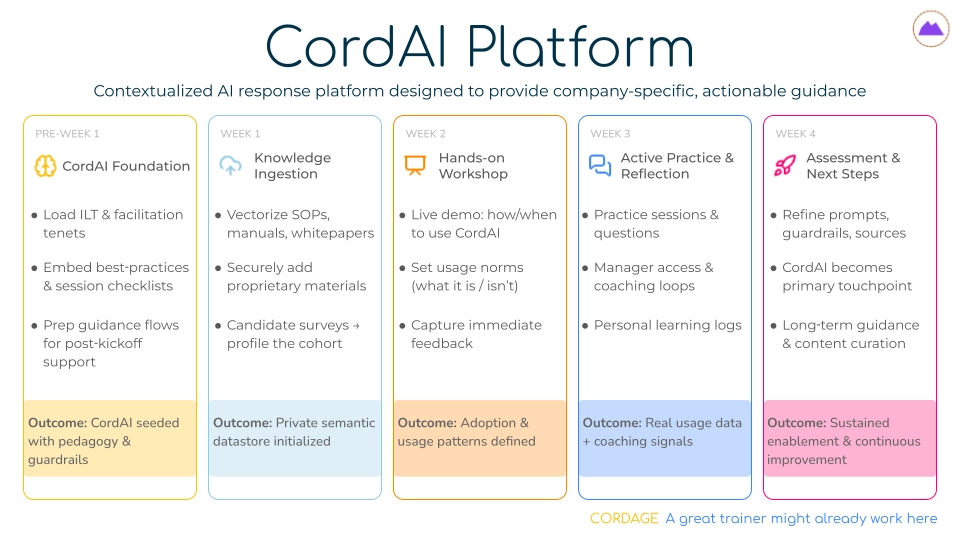
The above image depicts the CORDAGE program’s process. While the process is established and tested, because this program is company-specific, it may differ from engagement to engagement to meet the needs of the individual organization.
Hypothesis: Companies want skilled trainers in their organization
How might we provide a solution? We see the approach as a 5-week experience, engaging with organizations based on their specific needs.
A. Pre-Week 1
Once we kick off an engagement, we initiate a company-specific iteration of the program and platform.
What’s included:
- Foundational ILT & facilitation knowledge base
- Best-practices & milestones
Results:
- The CORDAGE platform contains configured knowledge-base with desired goals and outcomes.
- Participant information loaded into the system.
Why it matters: The platform is prepared before the work begins.
B. Week 1
Proprietary information and materials loaded into the platform.
What’s included:
- Company and industry SOPs, manuals, whitepapers, etc.
- Survey responses and desired outcomes
- Stakeholder direction and guidance
Results:
- A private, company-specific platform with initialized semantic datastore.
Why it matters: Including company-specific information, survey responses and desired outcomes, the platform is prepared to addresses specific needs as the program officially begins.
C. Week 2
This week is dedicated to the live, in-person (or virtual) workshop with program participants.
What’s included:
- Demonstration, practice and guidance of core skills
- Identification and contextualization of test programs
- CordAI how-to
Results:
- A recorded test segment with CORDAGE coach and initialized instructor guide.
Why it matters: Research has shown conducting guided, hands-on rehearsals is most impactful for understanding how to connect with learning audiences.
D. Week 3
Supporting participants’ learning with a mix of human and system-based guidance.
What’s included:
- Practice sessions & questions
- 1:1 feedback sessions
- Guide refinement, live session plan
- Manager access & coaching loops
- Personal learning logs
Results:
- CORDAGE team and CordAI guidance with usage data + coaching signals.
Why it matters: Reinforcement of acquired skills and guidance via the platform support participant progression with immediate application.
E. Week 4
Assessment & next steps, confirming participant readiness and alignment to business goals.
What’s included:
- Trainer Readiness Report
- CordAI becomes primary touchpoint
- Long‑term guidance & content curation
Results:
- Organizational hand-off of CORDAGE platform focused on sustained enablement & continuous improvement.
Why it matters: Ongoing cost-effective and actionable support of the new facilitator, their manager and organization.
Our focus: to meet organizations and individuals where they are – using our format as a guide to help them achieve their goals.
Our goal: to set folks up for success – configuring the platform to provide an optimal learning and growing experience.
Interested in learning more?