Item #2: Instructional Design Roles
The Many Roles and Responsibilities of Instructional Design Professionals
In Item #2 of the digital checklist, we cover the many types of roles instructional design professionals hold, the related duties, and the expectations employers and clients have of them.
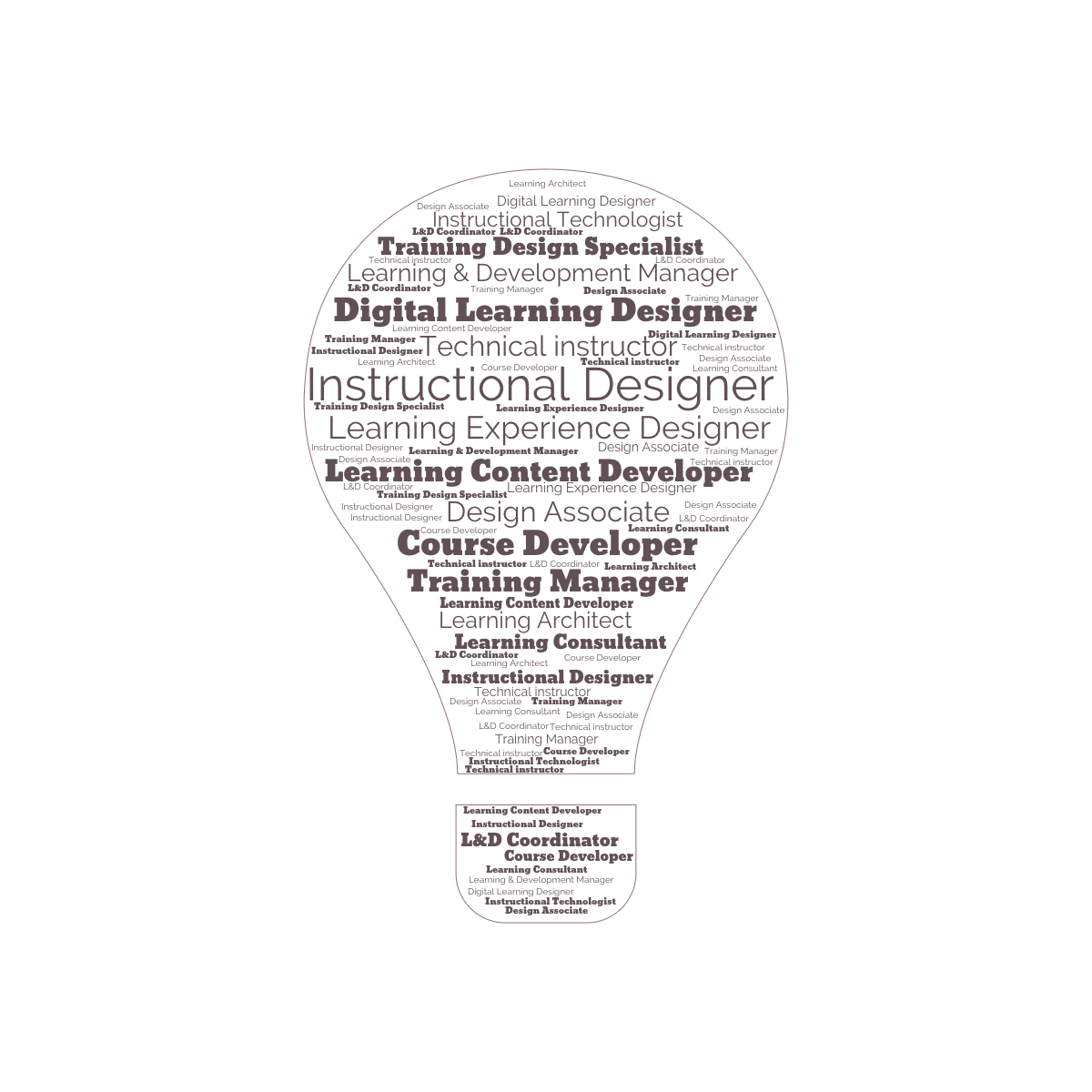
If you search for instructional design positions, you will likely end up with a large list of differing job titles.
To help with your search and to better understand the titles hiring managers are using, we’ve included the most common here:
- Instructional Designer
- Learning Experience Designer
- Digital Learning Designer
- Learning Content Developer
- Training Design Specialist
This can be a bit confusing. Here is a video expanding on some of the various titles and positions in the industry:
Job Titles Explained
Courtesy of our friends at Tim Slade Omnimedia
In his video, Tim Slade covers several job titles and details the responsibilities of each.
Different job titles may represent the same responsibilities. Or, while the title may be the same from one organization to the next, the responsibilities and expectations may be quite different.
It’s important to understand these differences and be sure the opportunity matches what you would like as an instructional design professional.
Responsibilities & Activities
The main responsibility of instructional designers, learning experience designers, developers, coordinators, etc., etc., is to create engaging and effective learning experiences that meet the needs of the target audience while supporting the achievement of learning objectives.
So what does that mean, exactly? Let’s answer that by exploring some of the day-in-the-life activities you’ll be doing to meet expectations.
On a typical day, you’ll be doing a combination of any or all of the below:
An important ability of learning designers is to identify what a person needs to know to do something and where they need help to do it effectively.
Identifying where someone needs help is accomplished by conducting an analysis of their current understanding compared to what is required to be successful. The gaps between the person’s understanding and what’s required of them, if any, are areas of focus for their educational needs.
Your understanding of key roles on a project is critical.
- Subject matter experts (SMEs) – your source for topic information. They know the material inside and out.
- Stakeholders – everyone who has a real interest in the outcomes of the project, but more specifically, those you should consult on project- or program-level decisions. Think of them as the purse holders.
- Team Members – folks you’ll work with to create the learning components and deliver the program; copywriters, videographers, media and graphic artists, editors and quality assurance folks, etc.
You’ll be collaborating with someone on a daily basis to ensure content accuracy and alignment with learning objectives.
You’ll be doing a mix of these three buckets on any given day, but each has its own distinct activities:
- Design – you’ll be using various techniques to create the structure and approach of the program.
- Development – of the learning components. You may design a program for one project, or learning objectives for another, or a larger project has you writing a script and recording audio, or even working with trainers to create assessments, etc.
- Deployment – this could be a handoff to another team, posting files to a learning management system (LMS), or something more involved like administering training to a group of students.
80% of your focus will fall within these buckets.
Once a learning program is live – and one of the most rewarding aspects of instructional design – you’ll want to measure how it impacts students.
You’ll use various techniques and tools to help capture results, but hearing directly from students provides insights you cannot get from a survey or management platform. First-hand reaction can be a valuable way to learn how people engage with the program, what gains they take with them, and how you might improve the program for future students.
Although many popular approaches have been around for decades, the industry is always advancing. Tools, techniques, and ways to help people reach their learning goals are evolving quickly. It’s important to stay informed.
Keeping pace with industry trends can be a challenge. Webinars, articles, podcasts, and talking with colleagues and experts are ways to improve your skills, create engaging solutions, and excel at your position.
Professional groups such as Association for Talent Development and Training Industry, Inc. are great ways to connect with learning industry professionals and learn about innovative approaches they’re applying.
Item #2 Takeaway
The role and responsibilities of instructional design professionals can vary greatly depending on the organization or project. We’ve covered the main ones here but look for a more detailed GimmeCredit article coming soon.
While we wish to provide as much detail in our learning items as possible, we are focused on providing you with a concise roadmap to prepare for an instructional design interview.
There will be plenty of time to dig into details after you’re in your new role.
This concludes Item #2 on your digital checklist. Nice work!
Note: In our ‘Other Resources’ sections, we follow our mission to provide self-driven learners like yourself guidance on where to learn more about the topics we cover in the digital checklist.
Other Resources
Job Titles in Instructional Design – a poll on eLearning Designers, by Liwei Wei
5 skills you need as an Instructional Designer – video on Youtube, by Sam Taylor
Learning design career options – an article on LXD Factory, by Rachel Prince
Top 10 In Demand Instructional Designer Skills – an article on eLearning Industry, by Tess Taylor
Here are a few more titles you may come across in your research:
eLearning Designer/Developer | Learning & Development Coordinator| Design Associate| Training Manager| Technical Instructor| Course Developer| Learning Architect| Instructional Technologist| Learning Consultant
Start your career in Instructional Design
Sign up and get started with our digital checklist today!